

Most conversations about adding a payment method start with what it costs to add it. That is the wrong first question. The better question is what it costs to leave it off, because that number is already being charged to you. You just are not seeing it on an invoice.
The lost sale you never know
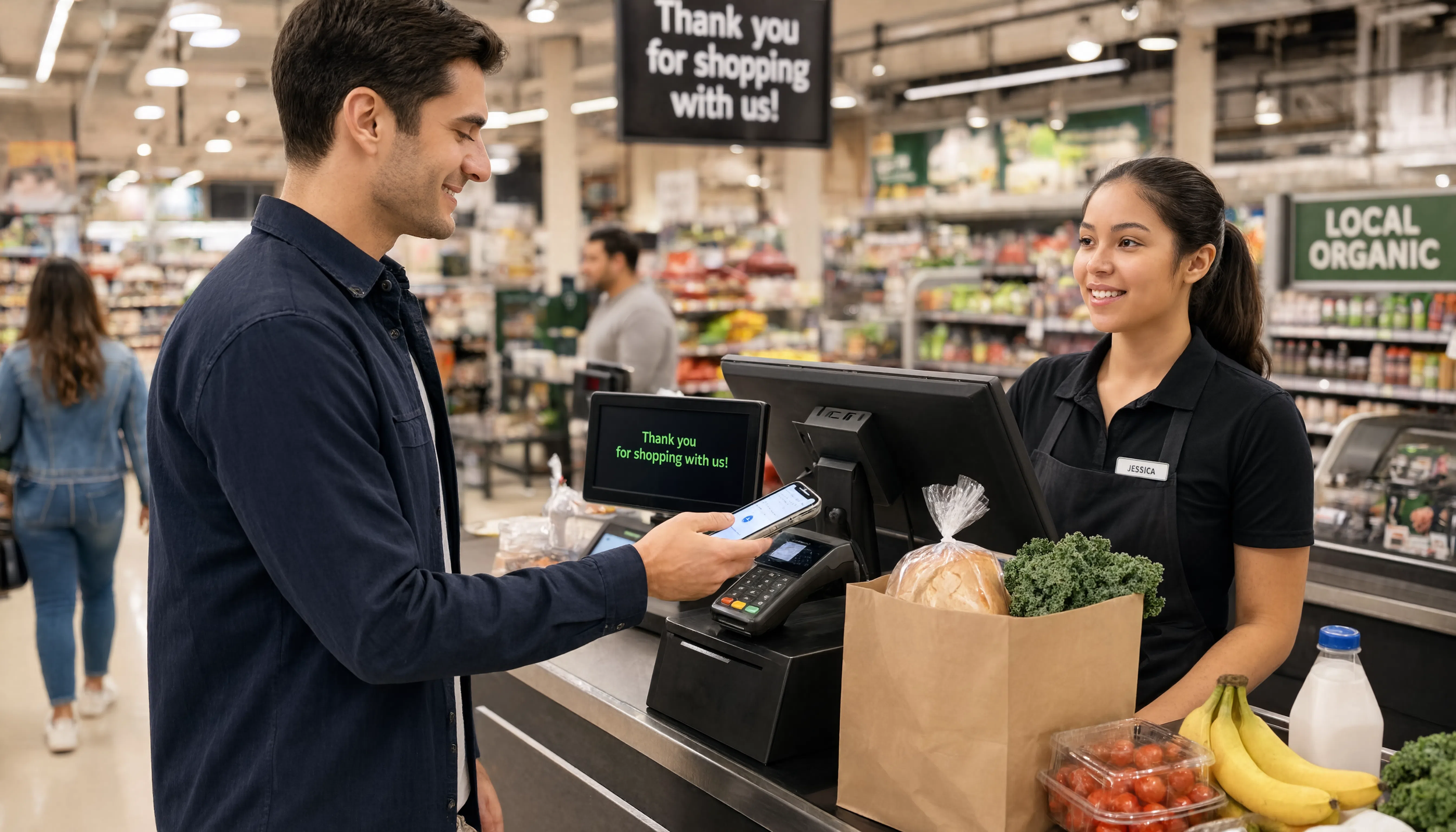
A customer walks up with a basket, reaches for their phone, and finds out at the register that you cannot take it. Some will dig out a card. Some will pay cash. And some will abandon the basket, especially on a small convenience run where the effort is not worth it.
In a 2026 research done by ChargeFlow, Apple Pay captures over 50% of the U.S. in-store mobile wallet transactions. Globally, it is the most popular digital wallet, with an estimated 785 million users and approximately $8.5 trillion in transaction volume.
Speed that matters
A contactless tap is faster than dipping a chip card. It is meaningfully faster than a customer who has to find the right card in a crowded wallet.
On a slow Tuesday afternoon, a few extra seconds per transaction is tolerable. On a Saturday at noon, on a holiday weekend, or in the ninety minutes after the neighborhood gets out of work, those seconds compound into a line. Long lines drive walkaways, they drive basket abandonment near the front end, and they push customers toward whoever has a shorter one.
The lost customers
Phone based payment skews toward younger shoppers and higher income shoppers. Those are two groups that independent grocers and specialty food operators generally want more of, not fewer of.
It also skews toward people who simply do not carry a wallet anymore. A runner stopping in after a workout, a commuter with a phone and keys and nothing else, a parent with both hands full. For that customer, a store that cannot take a tap is a store they will not coming back to.
The Competition
Your customers aren't comparing you to the business you were five years ago. They're comparing you to every place they've visited this week, from national chains to the neighborhood coffee shop.
When they can tap to pay everywhere else but have to dig through their wallet for a plastic card at your counter, they notice. Not with frustration, but as a subtle point of friction that quietly shapes how they perceive your business.
For an independent operator, one of your strongest advantages is delivering a better customer experience than the big box down the road. Giving that advantage away over something as simple as the payment experience is an unnecessary concession.
The security exposure
There is a risk side to this that has nothing to do with sales.
Every transaction where you handle a real card number is a transaction with real card data in your environment. Keyed entries, magnetic stripe swipes, and stored card numbers all expand what you are responsible for protecting and all expand your PCI scope.
Tokenized transactions do the opposite. The card number never enters your system, so it cannot be stolen from your system. Every customer who taps instead of swipes is one fewer real card number passing through your store. Declining to enable contactless means you keep that exposure at full volume by choice.
The cost saving
Faster checkout is also a labor conversation. If contactless payment shaves time off a meaningful share of your transactions, you get more throughput from the same front end headcount during peak. In a market where staffing an extra lane is both expensive and hard to do at all, that is not a small consideration.
What doing nothing actually means
Choosing not to enable Apple Pay is not a neutral choice. It is a decision to keep absorbing slower checkout, walkaways, a friction point against your competitors, and a larger security footprint than you need.
The frustrating part is that in a many cases the fix is not a hardware purchase at all. The capability is often already sitting in your terminal waiting to be switched on, or simply adding a stand alone Apple Pay pin pad.
Find out what saying no is costing you. Contact QSSfor a no obligation review of your current setup, and ask whether you qualify for a free Apple Pay installation and free equipment.