

Why IT and POS Integration Is the Hidden Profit Lever for NJ and NYC Grocery Stores
If you run a supermarket or independent grocery store, you already know the feeling: the POS is freezing at lane 3, the back-office computer just lost its connection to the scale system, your e-commerce orders aren't syncing to inventory, and a vendor is on the phone asking why their EDI feed didn't go through. Each problem feels small on its own. Stacked together, they're costing you thousands of dollars in lost sales, wasted labor, and quietly walked-away customers every single week.
Here's what most grocery operators miss: those aren't separate problems. They're symptoms of one underlying issue, a POS and IT environment that was never properly integrated. The fix isn't another piece of software. It's a unified, AI-enabled grocery technology stack where your POS, network, payments, inventory, e-commerce, and back office all talk to each other in real time.
Let's break down why this matters more than ever in 2026, and what a properly integrated grocery store actually looks like.
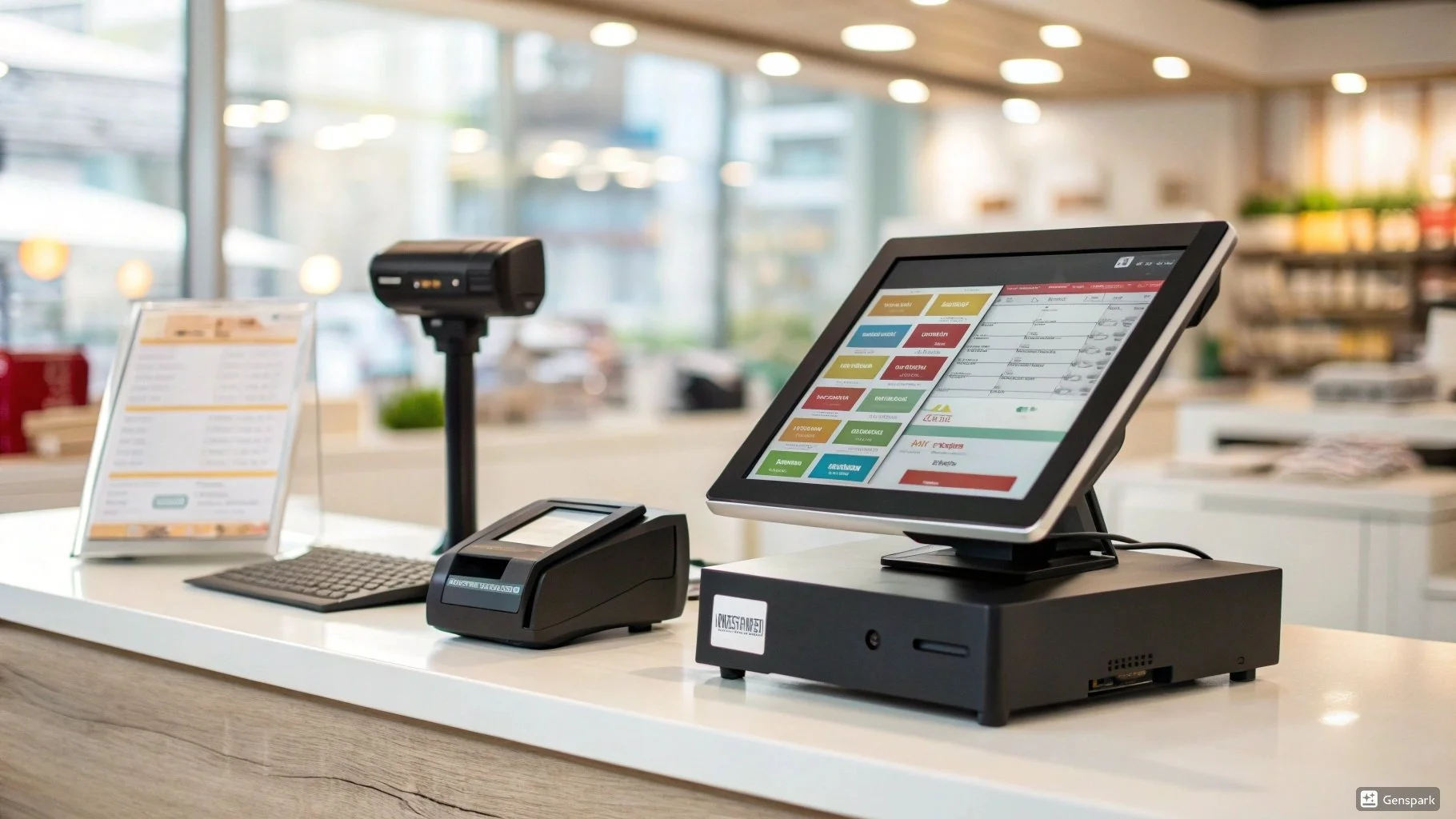
One Source of Truth for Inventory
In a non-integrated grocery store, your inventory lives in three or four different places: the POS, the back-office system, the receiving log, and the spreadsheet your store manager swears by. They almost never agree. When they disagree, you either oversell items you don't have or sit on dead stock you forgot you ordered.
When IT and POS are properly integrated, every scan at the register, every receiving event at the back door, every shrink adjustment, and every online order pulls from the same live inventory record. AI-driven forecasting layers on top of that data and recommends order quantities automatically. The difference shows up fast: tighter shelf availability on the items shoppers actually want, less spoilage in fresh departments, and lower total inventory carrying cost.
Hardened Security and PCI Compliance, Built In
Grocery stores are a prime target for cyberattacks. You're processing thousands of card transactions a day, you accept EBT and WIC, and your store network often connects dozens of devices: registers, self-checkouts, scales, electronic shelf labels, IP cameras, refrigeration sensors, and back-office PCs. A single weak link can expose customer payment data and trigger a PCI compliance nightmare.
An integrated IT and POS environment locks this down by design. Your payment network is segmented from the rest of your store traffic. Firewalls, endpoint protection, and patch management are handled centrally instead of one device at a time. AI-driven threat detection now monitors your network 24/7 and flags suspicious behavior before it becomes a breach. For independent grocers, this is no longer optional; it's table stakes.
Faster Lanes, Happier Customers
Nothing kills basket size faster than a slow checkout. When your POS, payment processor, scale, scanner, and loyalty system are all properly integrated, transactions move at the speed customers expect. Tap-to-pay clears in seconds. EBT and WIC items route correctly without cashier overrides. Produce weights flow from scale to screen instantly. Coupons and loyalty discounts apply automatically.
Self-checkout becomes a real option, not a constant source of attendant calls. AI-powered loss prevention runs quietly in the background, watching for missed scans and ticket-switching without slowing the line. The result is shorter waits, higher throughput per labor hour, and customers who finish their trip in a good mood instead of a frustrated one.
Real-Time Visibility From Anywhere
A modern integrated grocery stack puts your entire business on your phone. From wherever you are, you can see live sales by department, current cash in drawer, today's labor cost against plan, top movers, slow movers, and how your loyalty members are spending. AI-generated daily summaries highlight what changed since yesterday and what needs your attention.
This matters for two reasons. First, you make better decisions faster. You spot a slow Tuesday in the deli and adjust the schedule before payroll bleeds out. You see produce shrink trending up and call the department before it becomes a five-figure problem. Second, when you decide to grow, whether that's a second location, a third, or eventually a portfolio of stores, you have the operational infrastructure to scale without rebuilding from scratch.
Reliable Store IT That Actually Stays Up
Even the best POS in the world is useless if the network is down. Grocery is one of the few retail verticals where being offline for an hour during a Saturday rush can cost more than a small remodel. Integrated store IT means proactive monitoring, redundant internet connections, managed Wi-Fi, and a support team that sees a problem before your cashier does.
When something does break, an integrated environment makes the fix dramatically faster. Remote diagnostics replace truck rolls. Software updates push centrally instead of register by register. Your IT partner already knows your entire stack, so there's no finger-pointing between vendors when something goes wrong.
AI Across the Stack, Not Just at the Lane
The biggest shift in grocery technology over the last two years is that AI is no longer a feature; it's a layer that runs across the entire integrated stack. Demand forecasting predicts what you'll sell next week based on weather, holidays, and local events. Dynamic markdown engines calculate the optimal discount for each perishable item nearing code date. Personalized loyalty offers reach the right shopper at the right time. Computer vision flags shrink and operational issues at the lane.
None of this works in isolation. AI needs clean, unified data to deliver real ROI, and the only way to get clean, unified data is through proper IT and POS integration. Operators who skip the integration step and try to bolt AI onto a fragmented stack consistently get disappointing results. Operators who integrate first see real, measurable margin lift within the first year.
Why Independent Grocers in NJ and NYC Choose QSS
For over 50 years, QSS has been the technology partner of choice for grocery and supermarket operators across New Jersey and the New York metro area. We're a family-run business, which means when you call, you talk to people who know your store, not a script-reading help desk.
We design, install, and support fully integrated grocery technology environments built on proven AI-enabled platforms like Linga, Shift4, Clover, Payfacto, and Logivision, backed by hardened store networks, 24/7 monitoring, and PCI-compliant security. We handle the boring but critical work of making sure your POS, payments, scales, e-commerce, loyalty, and back office all run as one system, so you can stop firefighting and start growing.