

Are You (and your business) Ready for the World Cup?
It’s almost here!!! From June 13 through July 19, 2026, MetLife Stadium in East Rutherford will host eight FIFA World Cup matches, including five Group Stage matches, a Round of 32, a Round of 16, and the World Cup Final on July 19. FIFA Fan Festivals, fan zones in every NYC borough, and a Fan Village at Rockefeller Center will turn the entire metro area into one massive, five-week-long international event.
For grocery and restaurant owners across New Jersey and New York, this is a once-in-a-generation opportunity. It's also a once-in-a-generation operational stress test. Whichever way it goes for your store will be decided in the next few weeks, not in June, by one question:
Is your POS and IT infrastructure ready to handle the surge?
Let's break down what's actually coming, what the risks are, and why right now is the moment to do an honest, end-to-end checkup of your store technology.
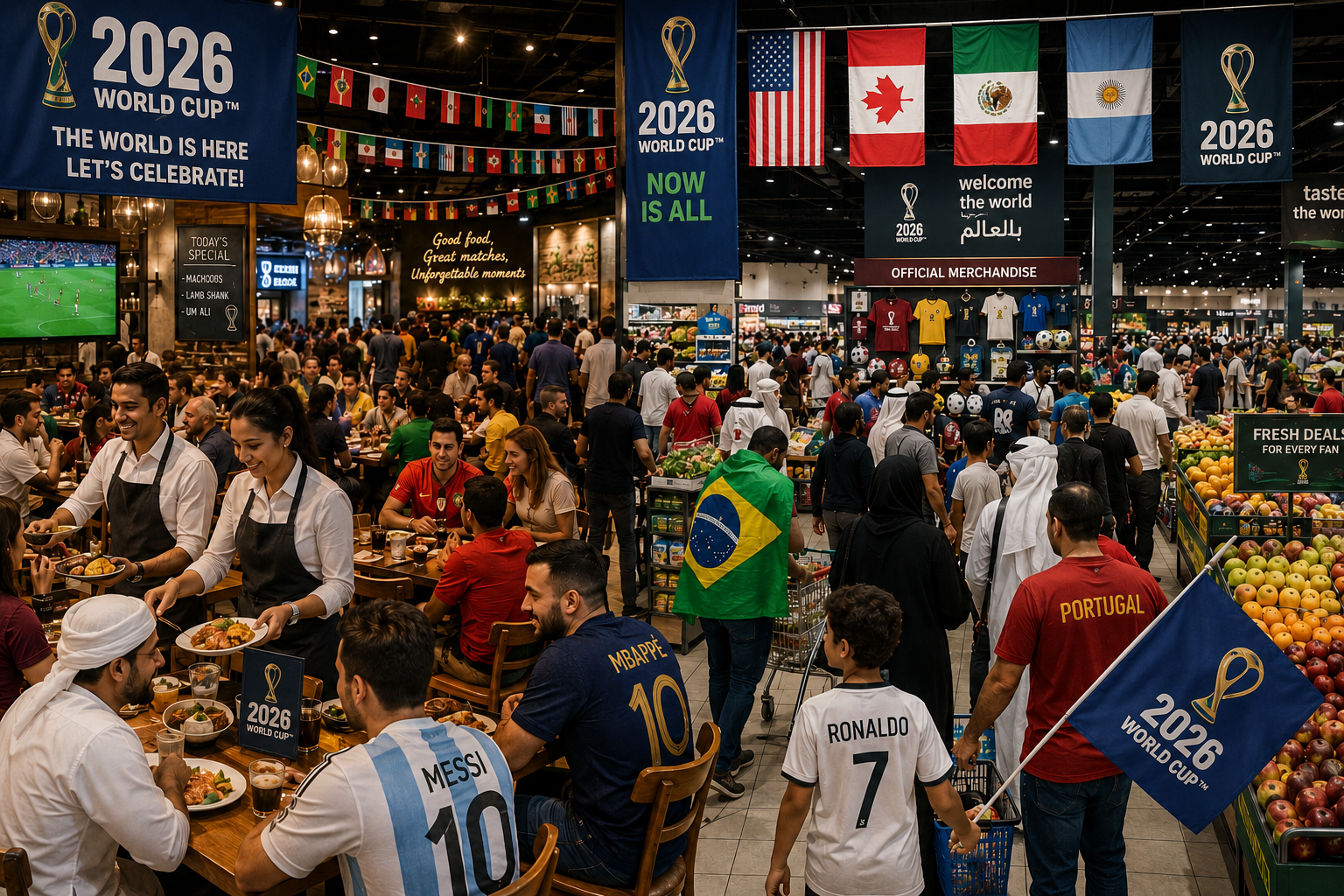
The Scale of What's Coming to NJ and NYC
The World Cup isn't a single Sunday afternoon event. It's five weeks of sustained, region-wide foot traffic the likes of which the metro area has never seen.
Hundreds of thousands of international visitors will be staying in hotels, Airbnbs, and short-term rentals from Jersey City to Long Island to Westchester. They'll be shopping at grocery stores for snacks, drinks, halal and kosher options, prepared meals, ingredients to cook in their rentals, and ethnic specialty items they recognize from home. Local residents will host watch parties at scale. Bars and restaurants will draw enormous crowds, sending overflow shoppers to nearby grocers for beer, ice, party trays, and last-minute essentials. Match days at MetLife will drive massive surges in Bergen, Hudson, Essex, and Passaic counties. Fan Festival days in Manhattan, Brooklyn, Queens, the Bronx, and Staten Island will do the same throughout the five boroughs.
If your store is within a 20-mile radius of MetLife Stadium or any of the official fan zones, you should be planning for some of your highest-volume days in the history of your business.
What Could Go Wrong
Now the uncomfortable part. The same surge that creates the opportunity also creates the risk. Here's what we see happen to grocery stores during major events when the technology stack hasn't been properly prepared:
POS systems freeze under transaction volume. Older terminals running on outdated processors or undersized servers simply can't keep up when your normal Saturday rush doubles. Lanes lock up. Lines back up. Customers walk.
Payment processing fails. Networks designed for normal traffic get saturated. Card terminals time out. Tap-to-pay stops responding. International visitors trying to use their home-country cards run into validation issues your current processor wasn't configured for.
Inventory falls out of sync. With sales velocity at three or four times normal, manual reorder processes can't keep up. You sell out of beer, water, snacks, and high-margin impulse items hours before your next delivery, while back stock sits unscanned in the receiving area.
Self-checkout breaks down. Without AI-powered loss prevention and reliable scale integration, self-checkout becomes a bottleneck instead of a relief valve, and shrink spikes as opportunists take advantage of overwhelmed attendants.
Cybersecurity threats spike. Major international events are magnets for cyberattacks. Skimmer fraud, phishing aimed at your office manager, and ransomware attempts all increase noticeably during high-profile events. A successful breach in the middle of your busiest five weeks would be catastrophic.
Internet outages take you cash-only. If your store is running on a single internet circuit with no failover, one ISP hiccup during a match-day rush turns away every customer who doesn't have cash on them.
Any one of these on its own is painful. Stacked together during five weeks of peak traffic, they don't just cost sales, they damage your reputation with thousands of new customers who would otherwise have become regulars.
The Opportunity if You're Ready
Now flip it. Imagine the same five weeks with your technology actually prepared.
Your POS handles the surge without a hiccup. Lanes move fast. Self-checkout runs smoothly with AI-powered loss prevention quietly working in the background. Your inventory system, powered by AI demand forecasting tuned for the event, has already adjusted reorder points on beer, water, ice, snacks, prepared foods, and ethnic specialty items. Your loyalty program captures every new international visitor as a future regular. Your payment processing handles cards from every country without friction. Your network has redundant internet, automatic failover, and 24/7 monitoring catching issues before they become outages.
The grocers who get this right won't just survive the World Cup, they'll come out the other side in July with materially higher annual revenue, a bigger loyalty base, stronger vendor relationships from the volume they pushed through, and operational momentum heading into the back half of 2026.
The grocers who don't will spend July telling each other war stories about everything that went wrong, and watching the credit card statements roll in showing exactly how much they left on the table.
Why Right Now Is the Window
It's already May 2026. The opening match at MetLife is on June 13. That's roughly four weeks to assess, plan, and implement any meaningful technology improvements before kickoff.
Four weeks is enough time, but only if you start now. POS hardware upgrades, network redundancy installs, payment processor migrations, security hardening, and staff training all take real lead time. Waiting until early June means missing the window entirely and gambling your peak season on whatever you currently have.
This is why we're urging every grocery operator in our service area to schedule an honest, no-pressure POS and IT checkup in the next two weeks. Even if your current setup is mostly solid, identifying the one or two weak links now is dramatically cheaper than discovering them on opening night.